
Your Burnout Isn't a Spiritual Failure. Here's What the Research Actually Shows.
What developmental science reveals about spiritual maturity — and why the struggle you are in right now might be the most faithful thing you have ever done.
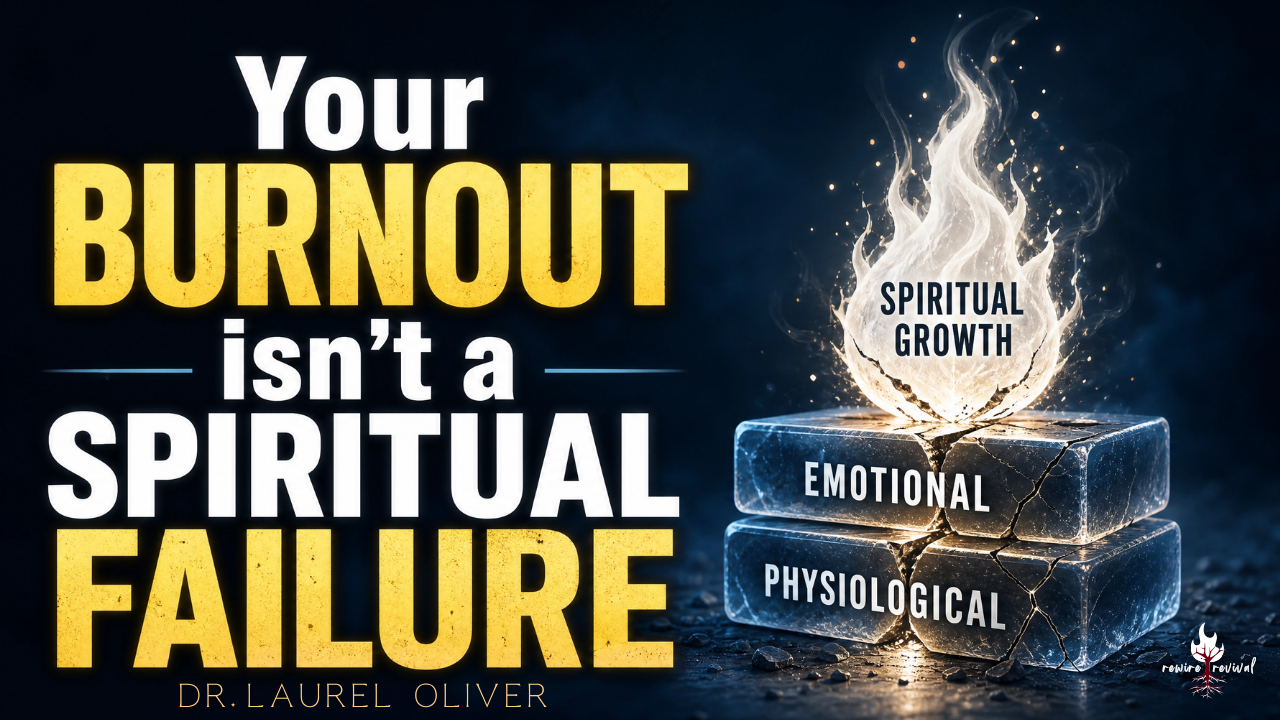
For most of church history, we have assumed spiritual depth is purely a matter of devotion — that the leader who is struggling, doubting, or running on empty is failing spiritually rather than developing. Recent research in developmental psychology is challenging that assumption, in much the same way it once assumed children were too cognitively immature to experience real spirituality, until the evidence said otherwise.
What that research reveals is this: spiritual maturity doesn't develop on its own separate track. It is woven into — and constrained by — our physical safety, our emotional capacity, our social world, and our cognitive growth. They move together, not apart.
This matters enormously for those of us in ministry. Because if spiritual growth depends partly on emotional and physiological capacity, then a leader who is dysregulated, exhausted, or in survival mode is not necessarily spiritually deficient. They may simply be developmentally constrained — and that is addressable.
The Foundation: Safety Becomes Faith
The earliest seed of faith isn't theological. It is relational. Research in developmental psychology shows that an infant who receives consistent love and care develops a felt sense of trust in the world — and that trust becomes the felt template for trusting a benevolent God. Where that early safety was missing, the template is different.
This is why so much of what we call "spiritual struggle" in adulthood is, underneath it all, a body that never learned it was safe. Before we can ask someone to trust God more, we may need to help them feel safe enough in their own body to trust at all.
There is a word for this in Hebrew:
"Be still, and know that I am God."
— Psalm 46:10 (NKJV)The Trap of Certainty
For most ministry leaders, spiritual identity gets formed in adolescence around right and wrong as defined by authority — an inherited, largely unexamined faith. That isn't a flaw; it is a normal and necessary developmental stage. The problem is what happens next.
Because a leader's vocation depends on representing certainty to others, the natural next developmental movement — where a person begins questioning, wrestling, and rebuilding a faith that is truly their own — can feel disqualifying instead of necessary. Doubt gets treated as falling away rather than what it actually is: a sign of growth that every developmentally healthy faith journey moves through.
Many leaders never move past this place. Not because they can't, but because their identity, livelihood, and community approval are all wired to staying inside it. So the survival patterning stays. The performance stays. The white-knuckled certainty stays. And eventually, the body sends the bill.
The Struggle Is the Doorway
What comes next in healthy spiritual development isn't comfortable. It is marked by personal reflection, by taking responsibility for one's own beliefs and feelings, by confronting the inconsistencies in what was once simply accepted. Every honest account of this stage — across developmental psychology and Scripture alike — names it the same way: a stage of struggle.
This is the Rewire season. Not a falling away from faith, but the necessary unburdening of inherited patterns — survival responses, performance, people-pleasing — that were never meant to be confused with faith itself. The nervous system and the soul are being asked the same question at the same time:
The research says this struggle is not a detour. It is the path. And the women and leaders who make it through are not the ones who bypassed the struggle — they are the ones who were given a framework wide enough to hold it.
Applied neurology, faith-rooted frameworks, and the clinical support to make the Rewire season survivable — not just endured. A 12-week program for women ready to stop white-knuckling it.
Apply for the Rewire Lab →What Revival Actually Is
What comes after the struggle isn't certainty regained. It is something far more spacious: the capacity to hold paradox, contradiction, and mystery without needing them resolved. The ability to coexist with prayer's unanswered questions and unwavering worship in the same breath.
This is what Revival means. Not a return to who you were before the struggle, but the release of what was always within you — reorganized into something whole. Like the eucalyptus tree that only opens its seed pods under the heat of fire, what looks like destruction is often the very mechanism of release. Nothing new is being created. What was always there is finally free to emerge.
"Behold, I make all things new."
— Revelation 21:5 (NKJV)A Closing Word
If you are a leader in the struggle right now — exhausted, doubting, no longer certain of things you once held without question — this is not evidence you have failed. The research, and Scripture itself, both point to the same truth: this is what growth looks like from the inside.
You are not falling away. You are being remade.
And your nervous system, your spirit, and your body are all being asked to make that journey together — because God's healing has always been whole-person. Spirit, soul, and body. None of it left behind.
Now may the God of peace Himself sanctify you completely; and may your whole spirit, soul, and body be preserved blameless.
— 1 Thessalonians 5:23 (NKJV)Dr. Laurel Oliver is the founder of Rewire Revival — an integrative clinical framework that brings applied neurology, functional medicine, and faith-rooted healing together for women who are done surviving and ready to thrive. She is the author of Rewire Revival and Ground Zero Healing.